Da Vincing Code

The socio-political spectrum of Kerala always has something to entertain the average Malayalee. Be it V S Achuthanandan on one hand or P C George on the other. But who wouldn’t get bored of the same circus you see everyday? So now it is the turn of V R Krishna Iyer and his committee of people who have drafted the Women’s Code Bill 2011 which is pending approval of the state government.

The proposed bill suggests provisions to imprison those who fathers more than two children. So if this bill is passed, you will be slapped with a Rs. 10,000 fine or three months of imprisonment when you expect a third child in the family. Not only that, those who have three children would be considered as legally disqualified and they cannot enjoy the state benefits.

Needless to say that these suggestions are draconian. To have two or more children should be left to the parents and to intervene in those basic human rights and to add penalty to it is fascist. We are not living in China, after all. What the government should do instead of passing this bill to raise awareness of the advantages of population control. Kerala anyway has the lowest rate of population growth in India.

The protests have begun and as expected from the minority communities. The Christian and Muslim communities entertain having more children among their flock. The Church had announced ‘benefits’ for it’s community members who have more than four children. What these religious communities are aiming with this is an increased community power and thus the socio-political bargaining power in the future. But the proposed bill puts a stop to this as one of the recommendations of the bill is that religious and political outfits cannot discourage family planning and I think that is a welcome suggestion.

Population control is a need of the hour for a dense country like India though the decision of having more or less children should rest with the parents. To discourage it in the name of religion or community is going against the country’s well being and future. And to offer benefits only to those who have four or more children is as draconian as lifting the benefits off people who have more than two children. So it doesn’t really make sense to see the opposition from the Church and Muslim community heads.

Another sensible proposition in the bill is to offer free and healthy abortions in government hospitals. Abortion is another area that the religious organizations, who usually cite moral reasons to oppose it, should back off. Legalizing and providing expert help for abortions would help save some lives that usually gets lost by consulting with illegal clinics and doctors. Those who want to do abortions would go ahead and do it regardless of the law or their religion allows them to do it, so why not let them have it safely with expert help?

So there are some pros and cons in this bill and I wish the pro points stayed and cons removed. But with the protest from religious/community heads it is likely that the Chandy government would scrap it altogether.


The state of music retailers

[This was first appeared in Soundbox, September issue, as part of the cover story by Anita Iyer on the future of physical music retail in India]

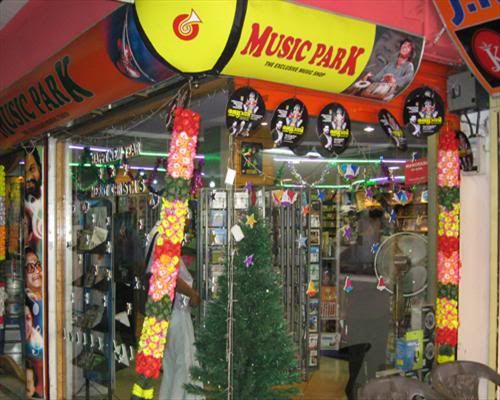
The music retailers in the south-Indian city of Thrissur are on the verge of losing their business to the greater threat of Internet piracy. Some of the small players in the business have already shut down their shops for good and the remaining retailers are struggling for business. Now there are only two large music stores in the city, if you ignore a couple of small stores, and the grapevine has it that one of them are planning to shut their business down soon. But how is it possible that a small south-Indian city music business is affected by Internet piracy? We are not living in a country like UK where 83% of the population are online. According to World Bank’s development indicators, we have only 5.3% of our population using Internet. So what could have lead to this situation?

Blame it on the mobile phones. Now everybody has one and they use it extensively to play music than making and receiving calls. Youth, regardless of the economic class they belong to, are addicted to playing music on their cell phones. From the school/college students to manual laborers working on a construction site, music plays in the background. But where do they get these MP3 files from? If you take a look at the students, they know how to access and download the latest film songs from websites. But even they are not willing to spend time browsing on Internet for MP3 songs. They know an easy way – bring their mobile phone to the nearest mobile phone selling and servicing shop, give them a phone memory card and get the latest songs copied after erasing the old ones. The mobile shop charges a small fee but you get the songs you want for a much cheaper price than buying an authentic CD from a music shop.

Mobile phone shops and Internet cafes run this as a side business. All you have to take with you is a phone memory card, USB thumb drive or a blank CD. CDs are fast disappearing and it is the memory card that the youth prefers and USB storage drives that businesses and vehicle owners prefer to go with.

Then what is left for the retailers? Gone are the days of music fans who would line up to buy an A R Rahman album on it’s release date. One of the music shops in Thrissur, Melody Corner, has introduced an ATM (ATM stands for ‘Any Time Music’ here) where people can choose from a collection of 1.5 lakh songs and copy the chosen songs to a CD. But they cannot compete with the price that the mobile/Internet shops offer because the latter gets songs off piracy websites for free.

A large portion of music stores is now dedicated to movies. The loyal buyers of music seem to be those who have a genuine interest in a wide variety of music – like western/eastern instrumental, classical music, ghazals, devotionals, world music and old Hindi/Malayalam song collections of a particular singer or composer. Can music retail business in small cities survive with this small group is the remaining question.

Jagathy vs. Ranjini – What’s missing in the debate

There has been so much fuss about veteran Malayalam actor Jagathy Sreekumar’s mockery of reality show anchor Ranjini Haridas on the grand finale stage of Munch Star Singer. The majority of the people who cheered Jagathy were Malayalee men, with a few exceptions from some ‘progressive quarters’, but both the “for” and “against” arguments have missed some valid points that Jagathy had raised. But let me clearly state that I don’t fully condone Jagathy’s ‘show’. There are a few things that I did not like about the way he spoke. But I totally agree with the core point of his speech, on which I will comment later in this post.

One thing I liked about the beginning of his speech was that Jagathy had congratulated the judges of the show for all the right reasons. He mentioned that compared to the judges of other reality shows, the judges of Munch Star Singer (singers Venugopal and Sujatha) were patient to correct the kids, without making fun of them to entertain the audience/viewers. Here, we know which show and to whom he was referring to. I haven’t seen any other popular celebrities speaking up against this on TV or in public except Yesudas (who once made a mockery of, whom I would call, “the Sangathy man”). But that is obvious, no Malayalee celebrity would want to offend one of the most popular TV channels in Malayalam. They would be risking some prime time TV appearance by this. So I think it takes some courage on  Jagathy’s part to say this.

Then the mockery happened. What I didn’t like about that part was that Jagathy could have conveyed what he wanted to say in a better manner, without insulting the anchor who was standing next to him on stage. It is probably the Malayali male ego and jealousy of women who speak English, I guess. And it could be the same reason that the video of Jagathy’s speech is spreading across YouTube. Part of his speech was also taking a chunk of allowed time to elaborate on what would get him some claps. He also didn’t have to unnecessarily drag actor Jayaram into the issue. He could have spoken for himself.

But the main point that he raised in his speech is valid. Jagathy said that the anchors do not have the right to pass judgement on the singing/performance of the participants (and I assume that he did not mean to avoid encouraging/supportive comments). He said that is a bad practice and anchors should do just their job, of presenting the show well, rather than passing judgement. Evidently, he aimed at Ranjini Haridas and he is right at that too. This is what some of the opposing voices against Jagathy, feminists and ‘progressive people’ alike, fail to see.

Ranjini Haridas is as bad an example for an anchor. She has made unwarranted comments on the participants and their talent. In some cases, this has reached an abusive level. Read this post from Insight Young Voices.

The following is from a 2008 segment of the show. The compere, Ranjini Haridas is admonishing the ill-fated singer Somadas who had just delivered a supposedly miserable performance in the classical music round:

“The judges have been telling you to start learning classical music for the past 4-5 stages, but have you? You know that in this show we are not looking for a particular type of singing. One has to sing classical songs, songs with feel, there must be range, perfect pitching, will Somu fit in this would be a question in spectators’ minds. you must realize that you have reached this far not because of them [pointing to judges] but them [pointing to spectators]. It’s their SMS that has pulled you through from stage to stage. But this competition should be won by the best singer.”

Let’s check out another segment of the same show. This is from an elimination round in 2007. Of the two singers in the fateful danger zone, Thushar is a classically trained singer and the other, Sannidhanandan is not. One of the judges Usha Uthup comments, “This is the most extreme spectrum. On the one side Thushar and on the other extreme Sanni“ music and popularity.

The compere Ranjini adds: “Sanni has always survived the danger zones because of them, the spectators. Thushar is a strong singer and Sanni is a strong performer.” At the end of the show the compere addresses the spectators and says: “let music be the winner. You must vote for those who are competent.” And in a master stroke she makes Sannidhanandan reiterate that appeal. (Needless to say, both Somadas and Sannidhanandan never became star singers.)

After all these insulting and abusive remarks, Ranjini Haridas can’t get away with it just because she is a woman and gets support from the feminists. Note that in her reply to Jagathy Sreekumar, she hasn’t admitted her fault. She said as a professional she handled her job well that day without replying in the same coin or running away. That is an admirable professional quality of course, but what about the professionalism when anchoring a popular show like Idea Star Singer?

Jan Lok Pal – the interim FAQ

There has been some heated discussions in the social media about Anna Hazare and Jan Lok Pal bill. Even though I have written a couple of posts about why I do not join hands with Anna Hazare and the knee jerk activism of middle-class, I think a summary post will be good so that I can save sometime typing the same thing again and again, rather direct people with questions here. So here are my views.

Why are you anti-Anna?

Because the man has a dubious character. He had praised Narendra Modi for his ‘development’ work in Gujarat which is refuted by other Gandhians like Himanshu Kumar. In Anna’s words, the only thing that Modi has to do to become a 100% perfect chief minister is to accept the Lokpal system. Later he white-washed his own words though; by saying “I am equally opposed to any form of communal disharmony“. Remember, Hazare was talking about a chief minister who still refuses to take the blame for his alleged support to a massacre.

Anna Hazare has also openly supported the MNS chief Raj Thackeray. And you know who Mr. Thackeray is and what his politics are. Cunning old man did not forget to add his Gandhian thought that ‘but damaging public and national property was not right‘. Everything else in the MNS regionalist game seems to be good for Hazare.

Hazare’s ways are autocratic than being democratic. It is evident from the way he has modeled the fight against corruption. He pushed his own bill without coming to a consensus between the civil society members themselves. This kind of attitude that ‘only-my-draft-is-right‘ is fascist. I cannot trust a man like him to take up the leadership or to represent the civil society. Supporting a man like him can only invite grave dangers to democracy.

But Anna Hazare is a widely trusted man who has built a model village called Ralegan Siddhi.

You should first read about how this so-called model village was built. I don’t see anything to model after a village where their moral was built on flogging and fear. I mean, even Adolf Hitler wanted to create a ‘puritan’ society based on fear and physical punishment and he had his ways to do it. Or even Narendra Modi had a lesson to teach people and now he is talking about development (no wonder why Anna supports Modi). Indira Gandhi had her ways to make citizens ‘responsible’ through Emergency. Ralegan Siddhi is a village where Anna ‘had the practical experience of need of force while implementing family planning measures’ and where there has been no grama panchayat elections in the last 24 years and no election to co-operative societies. That is not a model village, in my opinion.

Whatever his persona is, it was because of him that the government was forced to consider Jan Lokpal Bill. And you have to give him credits for that.

I will not. Because if he deserve any credit, it is for driving the movement in the wrong direction. Anna is an icon that was purposefully created by his team and the media. How many of us even knew about his existence in the last year? But then the media came and created a saint out of Anna. He seems to enjoy such publicity too. Then his own team started the beatification process. It grew up to a level where his own team members have said “ultimately, the power is with Anna, so whatever Anna says has to be accepted“. From then on it became a fascist, autocratic movement that can threaten the very basis of democracy.

But he had massive support of the people!

Have you ever thought about this sudden outrage of people, after all these years? Is it because the thought that ‘enough-is-enough‘ was sprouted one fine day? I don’t think so. Every generation is looking for some kind of revolution to take part. They want to witness something incredible in their life time and there could not be a better time than this season of revolutions world wide, especially in the middle-eastern countries. The youth, the middle-class and the national media were all missing this sort of fun and that is how Hazare, the mass icon, was born. You say ‘Anna is India, India is Anna‘. Anna alone is not India or India is not just Anna. India is you. And me. Us. Not Anna’s sole property.

By the way, a journalist friend from Delhi told me that Ramlila Maidan might have had just about 20,000 people at maximum and different media houses have added the numbers they liked, even to lakhs. And this 20,000 out of 1.21 billion people is called ‘massive support’?

But don’t you agree that the movement has made a change in the attitude of government towards the bill?

Yes, but it had the wrong nature and direction. And remember that it is only a small hurdle that is just passed and the time to rejoice is far away. I think this movement could have been driven in the right direction and still could make the change but the aggression of Hazare, his team, media, and the middle-class crusaders made it impossible.

You call it knee-jerk activism of the middle-class.

Yes, because I haven’t seen such enthusiasm of this so-called urban, semi-urban middle-class ‘activists’ changing their profile pic to Gandhi caps, defending Anna Hazare, or asking for their rights on any other issues of greater importance. They kept a criminal silence on several national and local issues and now they speak up.

People would speak up only about issues that they are directly affected by. Isn’t it justified?

No, it is not. Selective response is not a justifiable response at all. That is called hypocrisy. And the silence on the issues that people in your own or other parts of the country are facing, is criminal. To me, corruption doesn’t have a greater importance than north-eastern crisis or dalit/tribal issues or people being displaced in the name of development. The fact that Binayak Sen or Irom Sharmila doesn’t inspire you alone is proof of how you choose your icons or rather how you play into the hands of media and a group of people.

Are you pro-Government?

Yes, I am pro-Government but not pro-current-Government. I am also pro-Democracy. But I am not pro-Congress if your question was in that direction. You can do a search in my blog to see how much I have talked about the regional and national politics of Congress. You can start with searching the tag “congress party” in this blog.

Okay. So do you support the government draft of the bill?

No. Everybody knows that the government draft is crass. At the same time, I think there should not be a bad practice in place as a model for future agitations and protests. And in a democracy, consensus should be worked on first. Now there are four drafts in place (Jan Lok Pal, NCPRI’s draft, Loksatta’s draft and Bahujan Lok Pal) and the parliament should consider all four and act accordingly.

Well, that’s all I have to say about Jan Lok Pal for now.