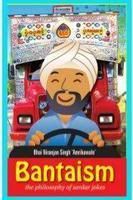
 I have a friend who used to text me (and other friends in our local friends group) Sardar jokes. He took great pleasure in sending those texts and we enjoyed reading them. When we met, he always had a few sardar jokes to share. He enjoyed telling each of these sardar jokes and if not us, he had always laughed out aloud on those jokes himself. Rest of us even began to carefully choose other topics to talk about, so we can save ourselves from the sardar jokes. 🙂 But Sardar jokes are just too good to skip. I think what makes them popular is that it has certain amount of innocence to it. Or furthermore, it has a bit of us or our daily life in it. Something that we can relate to. It is this side of Sardar jokes that Niranjan Ramakrishnan is exploring with his book titled, “Bantaism: Philosophy of sardar jokes“.
The book is a collection of sardar jokes with comments from the author on every single joke. Apart from the interesting and funny titles for each story (which are coined by the author himself), I found most of the ‘philosophical’ comments uninteresting and sometimes boring. The reason is obvious. You wouldn’t look for philosophy in time-pass jokes such as sardar jokes. But not all comments are boring and a couple of them does give you some philosophical insights. For example, look at the joke where one sardar in a lion’s costume meets another sardar in a tiger costume. The author draws a parallel to the BPO, call center jobs with this story which makes a lot of sense. Or the lesson on irreversibility with the story of ‘chicken vending machine’. And another one about the sardar who throws himself off the balcony thinking that his wife cheated on him. But considering the whole book, these are very few. Still, you could read the jokes alone if you wanted to skip the comments. If you are fond of sardar jokes and wanted to collect some in printed format, this one is just for you.
In a way, sardar jokes have reflected badly on Sikh community. The jokes have made us, the rest of the Indians, believe that all sardars are idiots or it is easy to trick sardars. But it also sheds some positive light that (though as a variant of idiocy) sardars are pure-hearted, innocent people. Our movies, especially Hindi movies, have always featured them on a positive light. The righteous, happy, pure and open group of people. The author in his introduction to the book treads on the same lines. Little does he mention (perhaps he didn’t want to ruin the mood-setting for the book) about the ‘other’ side of ‘sardarsphere’ that is totally in contrast to the image created by sardar jokes and Hindi movies. Prevalent practices of bonded labour, caste-ism etc in Punjab that Annie Zaidi had explored in her book, Known Turf.
One of the biggest advantage of sardar jokes is that it is crowd-sourced humor. You can tout one of your personal jokes as a sardar joke, just that you would change the main character to a sardar. The scope of sardar jokes is thus limitless. Most recent example of this would be Tintu Mon jokes from Kerala (the difference is that Tintu Mon makes fun of others whereas a sardar is made fool of himself).
Final word is that if you like sardar jokes, you would like this one because it has many popular sardar jokes in collection. But if you were curious to see what philosophy sardar jokes have to offer, well.. there isn’t much. Just enjoy the jokes and keep the book closed.
Title: Bantaism: The Philosophy Of Sardar Jokes
Author: Niranjan Ramakrishnan
Publisher: Rupa Publications
Price: Rs. 129
 Last week the social media was abuzz with the allegations of