BP and UC

While skipping through the photo galleries of the protest against BP oil spill in America, I saw the following slogans:

BP = $ Over Life
BP profits: The planet & people pay

For a moment, I thought about UC (Union Carbide) and the Bhopal verdict that came out recently. 25 years taken for a weak verdict to come out. It is a shame on us by itself. Add to that the reports of our own Government tried to help Warren Anderson escape the country back in ’84.

Now that the oil has spilled over to the shores of America, killing 11 workers and many species, and demanding BP to clean it’s shores of the USA, would the American Government now understand what it means to a country that lost 20,000 people and the chemical exposure of over 500,000 people in the Bhopal gas tragedy? And help put Warren Anderson to trial?

I don’t know…

I don’t know whom to believe any more.

Some say that Maoists are fighting for the tribals because of the abuse they face by the corporates and government. Maoists seem to be a group of people fighting for a cause.

But then I see Maoists killing people, jawans and civilians alike, and that makes me think how can such a group of killers ever fight effectively for a just cause.

Then some activists, including some ex-Naxalites, sign a press copy saying that they condemn the heinous acts of Maoists. They say that both the state and Maoists are abusing the tribals. They say that the fight against the mining industry was born even before Mao himself. And if Maoists have any sincerity in the matter, they should first fight the mining corporates than just plainly taxing them for business.

I don’t know. The picture that I get from all these is of the state and its politicians who make way for some corporates to function smoothly because there is big money for everyone to make in those thick, dark layers of land. And a set of killing machines who kill people to overthrow a corrupt system to replace it with another more centralized and violent system in the name of revolution. And a state-sponsored militia that fights/kills/abuses it’s own people.

I don’t know whom or what to believe anymore. But I do know that I should thank God that I was not born a tribal. For, at the end of the day, they are the ones who are most suffered, abused and wiped out of history that we, rest of the people in this land, keep making. I should be happy that I am not one of those unlucky tribals. But then that darn line keeps ringing in my head:

THEN THEY CAME for me
and by that time no one was left to speak up.

The Unreported World

I’ve just gone through a series of videos by Unreported World and two of them struck me so much because it was shot here in India. You MUST checkout their series of reports from world over and particularly the following:

The Broken People
“We’re forced to eat rats, because we cannot afford to buy food”

http://www.youtube.com/watch?v=Yc7iiFPDbDc
http://www.youtube.com/watch?v=leUEtR7ZUWk
http://www.youtube.com/watch?v=GiLFVuosdm4


The Land of Missing Children

http://www.youtube.com/watch?v=N7Wm4nasexY
http://www.youtube.com/watch?v=P_fT-yQ6WnE
http://www.youtube.com/watch?v=7I4Lc-yDGJU

Revenge or Justice?

“Justice is done” was the initial response of many Indians in the online and offline world, when the court verdict on Ajmal Kasab came out yesterday. I don’t understand what justice is being done here. Let me clarify – I am not talking about human rights and all that when it comes to Kasab. He deserves a severe punishment for the kind of crime he did. And a death row is definitely not a severe punishment for Kasab, because we are ending up doing LeT’s job for them. Kasab came here to kill as many people as he could and also either to kill himself or get killed in the process. And ironically, in the name of justice we are giving him what he really wanted – death. His masters would be happy that a country’s judicial system is doing what they originally intended to do – to kill a low-level suicide militant. Is that justice done to the victims of 26/11?

And is this going to send any message to LeT or such terrorist outfits? Is hanging Kasab going to stop them? Kasab’s masters would get a thousand Kasabs to replace him for their on-going or future operations. They have no use of getting a Kasab back, when they have new, unknown and enthusiastic Kasabs ready to kill themselves for their masters.

So what result is hanging Kasab going to bring? Kasab, the scapegoat of his terrorist masterminds in Pakistan, has now become the scapegoat here too. The government with all it’s intelligence failures and the inability to track down the mastermind roots will now gloat that we could kill a terrorist (after he’s done what he came here to do). The issue of our police force not being equipped with the right and proper armor (Karkare, a brave man, gave his life because of such ill-planning) will now die down.

I am not asking for mercy for Kasab, but a severe punishment; severe than a death sentence. And I think the best way to punish Kasab would be a rigorous life sentence as actor Rahul Khanna has tweeted. There would be more suffering than ending your life in a moment. With the hanging of Kasab, we are just taking a revenge, not doing justice.

And that’s got me thinking – When a victim takes revenge, it is called a Crime. When the state does that revenge for a victim, it is called Justice. Isn’t that funny?

Meet Masarat Daud

I have a thing against the Burqa. I think that thing represents a system of oppression designed by religion and men. Burqa, in my mind, has always remained to be a symbol of oppression, no matter how much those religious folks try to justify it by calling it a way of “protection”. So I was slightly amused when this Burqa-clad woman followed me on Twitter and had a look at her profile and there she is – A Burqa-clad woman who is fighting the very same thing that I think Burqas represent – Oppression.

Meet Masarat Daud, who is working to set girls of our rural areas free from oppression using education as a tool and bringing an event like TEDx to India’s villages, even with fighting the religious orthodoxy. Masrat runs an educational program called 8 Day Academy. She is changing the face of education in rural India through her work and is responsible for hundreds of girls getting the opportunity to attend schools. Since February 2009, Masarat has held three sessions of 8-Day Academy in her hometown Fatehpur, Rajasthan, training teachers and students from a local school in Computers and in Public Speaking & Communication skills. After eight days of Computers training, the team was able to use MS Word, MS Paint and know the theory of computing. All this by people who had never seen a computer before!

And then she brought TEDx to Shekhavati and you can read/listen more about her exciting and inspiring stories here and here . Also see her TEDx Shekhavati speech below:

The need for corruption

You know what, I have a huge admiration for Karan Thappar. What makes him different than the rest of interviewers from the Indian television scene is that, he is well-researched and very much up to the point in many of his interviews, rather than throwing some silly questions and being happy and content in just asking some questions.

Here he puts forward a good thought in an interview with Farooq Abdullah while they talk about Shashi Tharoor and the recent IPL controversy:

Farooq Abdullah: I don’t think so, I don’t think he needs to be corrupt

Karan Thapar: He doesn’t need to be?

Farooq Abdullah: No

Karan Thapar: Need doesn’t determine corruption.

Ever since Tharoor was contesting for MP from Trivandrum, the people who were supportive of him was of the opinion that he could not be corrupt like the other politicians because he doesn’t need to be corrupt. Because he gets – and they made up some big figures about this – a large amount of pension from United Nations and runs his own business. Some say it is 40 lakhs per month. Some say its more than that. But I really don’t get that point. Is privately owned wealth a good reason enough to claim that people wouldn’t be or needn’t be corrupt? If so, why isn’t that kind excuse offered to other rich and allegedly-corrupt politicians in India? How is Shashi Tharoor any different?

Kabhi Shashi, Kabhi Game

Now that Modi’s links with IPL team owners of Rajasthan Royals and Kings XI Punjab have emerged, the whole IPL controversy is getting more interesting, wide and ugly. I think there is enough material to make a movie out of the whole story. There is glamor, big money and beautiful women involved. What more do you need to make a good story line for a Bollywood movie?

So here is announcing the movie (title suggested by @rameshnair):


Kabhi Shashi, Kabhi Game
The story of an interlocutor and his friends


The movie will have two versions. In South India, Shashi is the hero and Modi is the villain. Up in the North, it is Modi in the lead and Shashi, the villain. Sreesanth will play the role of a crouching tiger in both the versions. Make up and costumes will be handled by Ms. Pushkar.

In the North Indian climax, the other Modi, Modi N, will be seen protecting Modi L and finally securing an IPL team for Ahmedabad and Shashi will be seen being left alone with a beautician in the Chala market in Thiruvananthapuram, looking for land with cheap prices to build IT parks.

In the South Indian climax, Shashi will win over Modi L, securing an IPL team for Kochi and building a cricket stadium near the Smart City project area. Modi L will be seen being left alone  with a South African model and sniffing 5 grams of Cocaine.

Part of the profits made from the movie will go to Mr. Modi and Twitter. We are looking for prospective producers for the movie, so do start bidding. And yes, multiple stake holders who are family members, friends and acquaintances of yours are welcomed.

Mother this, Mother that

There is an English medium school to the back of our house. Same school where they did not give me admission because my family could not affor the admission fees back in those days. They are growing up pretty big, thanks to the increasing donations for admission and funding. Now they have several blocks, dedicated to CBSE & state syllabus and a teacher’s training school. As the school expanded, they needed to have more entrances than the main gate. So they started looking to buy off any available land/house from our street to build new gates to the school. One for kids who came by auto rickshaws, one for kids who walked on the way home and one for those who cycled back home.

The then principal of the school, a young Catholic priest who was later accused of buying vans for the school registered in his name, first approached our neighbor to see if they were willing to sell off their house to the school. They happily obliged and the priest gave them a good price for the house and the land. Later that house was brought down to ashes to make an entrance road to the school. But the road wasn’t wider enough. So they approached my elder brother one day and asked if we were willing to sell our house too. My brother said we wouldn’t. In our street, ours was the oldest and almost-falling-down-to-the-earth house. So the priest could not see any reason for why we poor fellows wouldn’t sell off their house for a very good price which was competent with the market price.

The priest approached my father secretly and asked the same thing. Father said No. When my brother came to know about this, he went straight to the principal priest’s cabin in the school and told him, “We were in this place for the past 60 years. This house was built by my father’s mother. This is our ancestral house and we are not planning to move from here. So stop approaching any one of our family with your price tags“. Priest stopped asking further (though the one who came after him tried another way of compelling us which we dealt with legally), I later took up the land from family, built a new house there and now staying with my family there.

When I look at it again now, it is not the count of years that makes me stay in that very same place. This is a house that my grandmother built with my father and his brothers. They built the entire house with the mud bricks and sandstone powder. My grandmother lived and died there (though I don’t have even a fainted memory of hers). My second brother lived in this house too, before he died at the age of 27 in a road accident and his body was brought into that very same house. This is family. There are emotions attached to this 5 cents of land. No power can ever buy that with their money, unless something real bad happens to our survival.

This is why I love that place. My home, because my family live in there. My street, because that is where our house is at. Our small semi-urban village, because that’s where our street is, my childhood friends are and the local community is with people whom I’ve known since my childhood. Thrissur, the city that I have grown up with it’s nooks and corners. Kerala, because Thrissur is a district in Kerala state. And my country India, because my state is part of this country and the people from our state have contributed significantly to build this country.

But the home town or home state changes to another form when it comes to define the country. It is not just home land, it is Mother land. I don’t understand what that means. Mother land? The country is seen as mother, we are taught. But why? A country is made of pieces of land and what makes us sentimental about it is because it hosts our home. If we were born and lived in America or Africa, that would be our home. When M F Hussain painted India as a nude woman, the fanatics and the so-called educated lot (I call them the qualified lot, because they are never educated in the word’s truest sense) came up in arms against him, asking if he would dare paint his Mother in nude form. Our nationalist blood boiled when we saw this piece of land as a nude woman. But we never raised much voices when girls were raped and killed in the very same mother land, just because they looked Chinese, though they were born in the same country. We had no problem in cutting the womb of a mother in this mother land, or killing the sons and daughters of other mothers in this mother land. Burning them. Raping them. But “insulting” a piece of land? That’s unbearable to us even when those killers and rapists walk among us.

Mother land, mother tongue… mother this… mother that… what do they mean really? What kind of conveniences or excuses do they give us? How are we assigning any meaning to them?

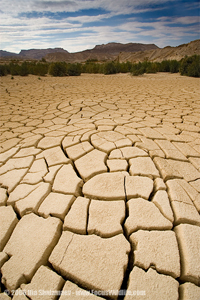
(Image courtesy: Focuswildlife.com)
Developments on the development

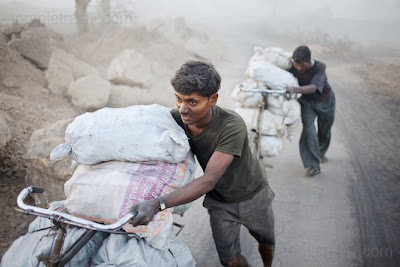
If the wealth of mineral extraction is funding social welfare spending, The Economist should ask why ordinary rural communities, like those I met in Jharkhand’s Karanpura valley, persist in a six year struggle to keep coal mining companies and thermal power plants from their land. And too why resistance groups like Jharkhand Mines Area Coordination Committee would sooner face imprisonment than capitulate to myths about development. People living in places like the Karanpura valley are not stupid. They have seen their mineral wealth shipped out to benefit others. They understand better than anyone else that local communities must be at the forefront of the decision making process if they are ever to challenge the powerful interests that exploit Jharkhand’s wealth and continue to deny human rights to those who are being forced from their land.

We have heard it before and we keep hearing. And we keep believing all those big talks of how they help in protecting our future or how much they spend on enhancing our lives. Now, head over to see and read this excellent photo essay at Tom Pietrasik‘s blog on the reality of mining in India.

Open letter to M F Husain

Dear Mr. Husain

I have great respect to artists. Especially to those like you who have set your own mark in the field of art, though I don’t understand (and can’t appreciate) certain forms of art due to the lack of my knowledge in the field of art. But as far as the freedom of expression goes, I am fully with you Sir. That nobody holds the right to tell an artist how he/she should express through their art. And an artist need not consider what his/her audience asks what to do with their artistic medium because that will kill the sole purpose of his/her work. Art is born when an artiste feels that he/she cannot live without doing it.

But you should also consider, Mr. Husain, that people are free to protest. Peacefully, yes. They can file complaints in the court and as long as the laws of the country see it fit, the court can ask you to be present and give an explanation by the law. No sir, I am not supporting the Sangh Family here. Those goons will have this or any other reason just to flare up the communal sentiments and get people into the street to get them killed. On one hand they proclaim they are a civilized society unlike the Fatwa issuing communities and on the other they issue their own Fatwas – like offering Rs. 51 crores to behead you, 1 KG of Gold to gouge your eyes and 20000 Euros to chop off your hands. But except for their blind and foolish supporters, nobody has thought a bit highly of them, so let us leave it at that.

Now coming to the matter at hand, shouldn’t you accept the end results of your work with the same courage that you took to do your creative work? Shouldn’t you face the court, like many brave souls did, to stand tall and firm for the artistic cause you had? Have you ever thought of what kind of an impression it leaves upon the supporters of freedom of expression when you go hiding in another country and fly around in your Ferrarri while you put all the blame on your old homeland? I do understand, that any man can get afraid of getting caged at this age, after having been revered as one of the great artists of our time. So if you just simply said that you don’t prefer to live in India fearing the court case, that would make more sense. But by putting blame on India, that it did not protect you or there were not enough sane and supportive voices, you are insulting the sensitivity of the majority of the people here in India, who have always supported the freedom of expression, unlike a few goons from the saffron brigade.

Were you running away fearing for your life? But even then, what makes you think you are more secure in Qatar? Fundamentalists are everywhere and if you are running away from them, you will have to run away from the whole world. So what is the kind of example that you are setting here?

You say a painter is a world citizen. But why just the painter, Sir? We are all citizens of this world, not just you. We all know that countries, states and borders are all illusions drawn by some people to stay firm to powerful places, but it is our convenience and sentiments that makes us stay where we are. Why don’t you just accept and admit that simple fact?

PS: I am also curious as to why you mentioned you had a friend, who was a “Brahmin”. What and how does that matter in proving your tolerance to religions?

Related post: I am an Indian