ഈശോ, യേശു, ജീസസ്

ഈശോ…

നൂറ്റൊന്നു സുകൃത ജപങ്ങള്‍
ദിവസങ്ങളോളം ഉരുക്കഴിച്ചു കൊണ്ടുണ്ടാക്കിയ
പിച്ചള വളയുമണിഞ്ഞു
എല്‍.പി.സ്കൂളിന്റെ മുറ്റത്തു സ്ഥാപിച്ച
ചില്ല് കൂട്ടിനുള്ളില്‍ നിന്ന് ചിരിക്കുന്ന കുട്ടി.

യേശു…

അമ്മയുടെ ശുഷ്കിച്ച വിരലുകള്‍ക്കിടയിലൂടെ
ഊര്‍ന്നിറങ്ങുന്ന കൊന്ത മണികള്‍ക്കൊടുവില്‍
തൂങ്ങിയാടുന്ന ദൈവപുത്രന്‍.

ജീസസ്…

ഭാഷാ വരത്തിന്റെ അലര്‍ച്ചയിലും,
ഉപദേശിയുടെ കറുത്ത ചട്ടയിട്ട ബൈബിളിലും നിന്ന്
സുമുഖനായ അമേരിക്കന്‍ ദൈവത്തിന്റെ മുഖം മൂടി മാറ്റി
ഇറങ്ങിയോടാന്‍ വെമ്പുന്ന ഒരു ജൂത വിപ്ലവകാരി.

(പ്രേരകം – സാറാ ജോസഫിന്റെ ആത്മകഥ കുറിപ്പിലെ യേശു അനുഭവം).

The Steve Jobs effect

daa, did you read the newspaper today?“, I heard my mother asking. “Yes, why?” “Who is this Steve Jobs? What did he do?” The Malayalam daily had carried the headline of Steve Jobs’s demise and my mother was wondering how come this name that she had never heard of before occupies the prime space of the local newspaper. She was even more curious to read that this man was the founder of ‘Apple’. When I heard this innocent, curious question from my mom, I thought, what do all these obituaries praising Steve Jobs as a man who has made a difference in the everyday life of people really mean to a country like India and it’s people?

Until the recent past, Steve Jobs (or Mac) was a name or rather some sort of elite, exclusive knowledge for the techies in India that they would occassionally use to exhibit their knowledge of the world of computers. It is like when a group of people talks about Micheal Jackson and then someone in the group tells them, “MJ is crap, you should hear < the-name-the-majority-of-people-in-the-group-has-never-heard-of >” and rest of the group would think, “wow, this guy must know a great deal of western music“. Ironically, this elite exclusivity (and I am speaking from an Indian context) is also the core of the line of products that made Steve Jobs popular.

I had not seen a Mac machine until I stepped into the studio of Chetana Film Academy in Thrissur. Mac, in those days, was the most expensive computer I had heard of. Someone told me that the Mac I saw in the studio, even the low-end ones, was prized at around one lakh Indian rupees. Then came iPod that had many models to choose from according to your budget. The music experience of iPod was of course good, but I don’t know what special did iPod do in a market of MP3 players that Sony’s Walkman did not do in a market of audio cassette players (and I like the audio quality of Microsoft’s Zune compared to iPod but that product seems to have failed miserably). Then the iPhone, that forces you to choose a cellular operator of Apple’s choice (speaking legally, I’m aware of the ‘unlock option’), and the version 4 costs about 45,000 Indian rupees. iPad followed shortly after which is yet another upper middle-class toy.

So what significance does Steve Jobs have in a country like India? Is it for those fancy gadgets that has not made any change in the life of people here except, of course, for the business class and upper middle-class? No. It is his journey of life that stays inspirational to many people. The story of an adopted kid, the college drop-out who followed his dream to become one of the most famous and successful entrepreneurs in the world. The man who stayed hungry and foolish. It is for his life that he will be remembered best.

As for me, other than his life story, I thank him for Pixar that continues to give us the best animated feature films of our times.

The Malayali Mob

When they hear about a group of people beating someone to death for petty crimes, Malayalees would take pride that it did not happen in their home state. ‘Must be Bihar‘, they would say. ‘Or some other illiterate state in India‘, they would comment. But when they got a chance, they proved themselves to be the most hypocritical society in India. And note that the victim here was not a thief, but a complete innocent.

Raghu, a native of Palakkad, was traveling to Perumbavoor in a bus with some money that he borrowed from gold loan. That is when two people got into a fight with him and started beating him. When people had noticed, they accused Raghu of pick-pocketing. It is only when Raghu got sick of the beating and fell down on the ground that the KSRTC employees kept the two culprits in their custody and informed the police. But Raghu had died before the police could reach the taluk hospital with him.

One one hand there is Raghu, a father of two, who took a gold loan of Rs. 19,000 from the local co-operative bank to help his wife’s grandmother’s family in Tamil Nadu. On the other, there are two people – one of them a gunman, a cop, to a Member of Parliament (K Sudhakaran) which gives him ‘special privileges’. Then there is police, who refused to give details of the questioning of the culprits and prevented the media from taking photos of them. They said it was an ‘order from the top’.

Then there is me and you – the Malayali common men who seems to believe that beating someone to death is justified if the victim is a pick-pocket. That is probably why nobody stopped the two culprits – the gunman and his friend – when they said the money that Raghu carrying was pick-pocketed. It is the same Malayali mindset that would justify the men who slapped a woman for traveling with a friend at night with a comment that ‘she deserved it‘, because she was traveling with her friend to drop her at her place after a night shift job. The same Malayali men who would justify the flesh trade pimping minor girls with a comment ‘why did that girl go with that man in the first place?‘, ‘she must have been craving for sex‘.

I think more than these people who abuse their power and positions, it is on us to take the blame. For being the silent spectators that we have turned out to be.

Da Vincing Code

The socio-political spectrum of Kerala always has something to entertain the average Malayalee. Be it V S Achuthanandan on one hand or P C George on the other. But who wouldn’t get bored of the same circus you see everyday? So now it is the turn of V R Krishna Iyer and his committee of people who have drafted the Women’s Code Bill 2011 which is pending approval of the state government.

The proposed bill suggests provisions to imprison those who fathers more than two children. So if this bill is passed, you will be slapped with a Rs. 10,000 fine or three months of imprisonment when you expect a third child in the family. Not only that, those who have three children would be considered as legally disqualified and they cannot enjoy the state benefits.

Needless to say that these suggestions are draconian. To have two or more children should be left to the parents and to intervene in those basic human rights and to add penalty to it is fascist. We are not living in China, after all. What the government should do instead of passing this bill to raise awareness of the advantages of population control. Kerala anyway has the lowest rate of population growth in India.

The protests have begun and as expected from the minority communities. The Christian and Muslim communities entertain having more children among their flock. The Church had announced ‘benefits’ for it’s community members who have more than four children. What these religious communities are aiming with this is an increased community power and thus the socio-political bargaining power in the future. But the proposed bill puts a stop to this as one of the recommendations of the bill is that religious and political outfits cannot discourage family planning and I think that is a welcome suggestion.

Population control is a need of the hour for a dense country like India though the decision of having more or less children should rest with the parents. To discourage it in the name of religion or community is going against the country’s well being and future. And to offer benefits only to those who have four or more children is as draconian as lifting the benefits off people who have more than two children. So it doesn’t really make sense to see the opposition from the Church and Muslim community heads.

Another sensible proposition in the bill is to offer free and healthy abortions in government hospitals. Abortion is another area that the religious organizations, who usually cite moral reasons to oppose it, should back off. Legalizing and providing expert help for abortions would help save some lives that usually gets lost by consulting with illegal clinics and doctors. Those who want to do abortions would go ahead and do it regardless of the law or their religion allows them to do it, so why not let them have it safely with expert help?

So there are some pros and cons in this bill and I wish the pro points stayed and cons removed. But with the protest from religious/community heads it is likely that the Chandy government would scrap it altogether.


The state of music retailers

[This was first appeared in Soundbox, September issue, as part of the cover story by Anita Iyer on the future of physical music retail in India]

The music retailers in the south-Indian city of Thrissur are on the verge of losing their business to the greater threat of Internet piracy. Some of the small players in the business have already shut down their shops for good and the remaining retailers are struggling for business. Now there are only two large music stores in the city, if you ignore a couple of small stores, and the grapevine has it that one of them are planning to shut their business down soon. But how is it possible that a small south-Indian city music business is affected by Internet piracy? We are not living in a country like UK where 83% of the population are online. According to World Bank’s development indicators, we have only 5.3% of our population using Internet. So what could have lead to this situation?

Blame it on the mobile phones. Now everybody has one and they use it extensively to play music than making and receiving calls. Youth, regardless of the economic class they belong to, are addicted to playing music on their cell phones. From the school/college students to manual laborers working on a construction site, music plays in the background. But where do they get these MP3 files from? If you take a look at the students, they know how to access and download the latest film songs from websites. But even they are not willing to spend time browsing on Internet for MP3 songs. They know an easy way – bring their mobile phone to the nearest mobile phone selling and servicing shop, give them a phone memory card and get the latest songs copied after erasing the old ones. The mobile shop charges a small fee but you get the songs you want for a much cheaper price than buying an authentic CD from a music shop.

Mobile phone shops and Internet cafes run this as a side business. All you have to take with you is a phone memory card, USB thumb drive or a blank CD. CDs are fast disappearing and it is the memory card that the youth prefers and USB storage drives that businesses and vehicle owners prefer to go with.

Then what is left for the retailers? Gone are the days of music fans who would line up to buy an A R Rahman album on it’s release date. One of the music shops in Thrissur, Melody Corner, has introduced an ATM (ATM stands for ‘Any Time Music’ here) where people can choose from a collection of 1.5 lakh songs and copy the chosen songs to a CD. But they cannot compete with the price that the mobile/Internet shops offer because the latter gets songs off piracy websites for free.

A large portion of music stores is now dedicated to movies. The loyal buyers of music seem to be those who have a genuine interest in a wide variety of music – like western/eastern instrumental, classical music, ghazals, devotionals, world music and old Hindi/Malayalam song collections of a particular singer or composer. Can music retail business in small cities survive with this small group is the remaining question.

Jagathy vs. Ranjini – What’s missing in the debate

There has been so much fuss about veteran Malayalam actor Jagathy Sreekumar’s mockery of reality show anchor Ranjini Haridas on the grand finale stage of Munch Star Singer. The majority of the people who cheered Jagathy were Malayalee men, with a few exceptions from some ‘progressive quarters’, but both the “for” and “against” arguments have missed some valid points that Jagathy had raised. But let me clearly state that I don’t fully condone Jagathy’s ‘show’. There are a few things that I did not like about the way he spoke. But I totally agree with the core point of his speech, on which I will comment later in this post.

One thing I liked about the beginning of his speech was that Jagathy had congratulated the judges of the show for all the right reasons. He mentioned that compared to the judges of other reality shows, the judges of Munch Star Singer (singers Venugopal and Sujatha) were patient to correct the kids, without making fun of them to entertain the audience/viewers. Here, we know which show and to whom he was referring to. I haven’t seen any other popular celebrities speaking up against this on TV or in public except Yesudas (who once made a mockery of, whom I would call, “the Sangathy man”). But that is obvious, no Malayalee celebrity would want to offend one of the most popular TV channels in Malayalam. They would be risking some prime time TV appearance by this. So I think it takes some courage on  Jagathy’s part to say this.

Then the mockery happened. What I didn’t like about that part was that Jagathy could have conveyed what he wanted to say in a better manner, without insulting the anchor who was standing next to him on stage. It is probably the Malayali male ego and jealousy of women who speak English, I guess. And it could be the same reason that the video of Jagathy’s speech is spreading across YouTube. Part of his speech was also taking a chunk of allowed time to elaborate on what would get him some claps. He also didn’t have to unnecessarily drag actor Jayaram into the issue. He could have spoken for himself.

But the main point that he raised in his speech is valid. Jagathy said that the anchors do not have the right to pass judgement on the singing/performance of the participants (and I assume that he did not mean to avoid encouraging/supportive comments). He said that is a bad practice and anchors should do just their job, of presenting the show well, rather than passing judgement. Evidently, he aimed at Ranjini Haridas and he is right at that too. This is what some of the opposing voices against Jagathy, feminists and ‘progressive people’ alike, fail to see.

Ranjini Haridas is as bad an example for an anchor. She has made unwarranted comments on the participants and their talent. In some cases, this has reached an abusive level. Read this post from Insight Young Voices.

The following is from a 2008 segment of the show. The compere, Ranjini Haridas is admonishing the ill-fated singer Somadas who had just delivered a supposedly miserable performance in the classical music round:

“The judges have been telling you to start learning classical music for the past 4-5 stages, but have you? You know that in this show we are not looking for a particular type of singing. One has to sing classical songs, songs with feel, there must be range, perfect pitching, will Somu fit in this would be a question in spectators’ minds. you must realize that you have reached this far not because of them [pointing to judges] but them [pointing to spectators]. It’s their SMS that has pulled you through from stage to stage. But this competition should be won by the best singer.”

Let’s check out another segment of the same show. This is from an elimination round in 2007. Of the two singers in the fateful danger zone, Thushar is a classically trained singer and the other, Sannidhanandan is not. One of the judges Usha Uthup comments, “This is the most extreme spectrum. On the one side Thushar and on the other extreme Sanni“ music and popularity.

The compere Ranjini adds: “Sanni has always survived the danger zones because of them, the spectators. Thushar is a strong singer and Sanni is a strong performer.” At the end of the show the compere addresses the spectators and says: “let music be the winner. You must vote for those who are competent.” And in a master stroke she makes Sannidhanandan reiterate that appeal. (Needless to say, both Somadas and Sannidhanandan never became star singers.)

After all these insulting and abusive remarks, Ranjini Haridas can’t get away with it just because she is a woman and gets support from the feminists. Note that in her reply to Jagathy Sreekumar, she hasn’t admitted her fault. She said as a professional she handled her job well that day without replying in the same coin or running away. That is an admirable professional quality of course, but what about the professionalism when anchoring a popular show like Idea Star Singer?

Jan Lok Pal – the interim FAQ

There has been some heated discussions in the social media about Anna Hazare and Jan Lok Pal bill. Even though I have written a couple of posts about why I do not join hands with Anna Hazare and the knee jerk activism of middle-class, I think a summary post will be good so that I can save sometime typing the same thing again and again, rather direct people with questions here. So here are my views.

Why are you anti-Anna?

Because the man has a dubious character. He had praised Narendra Modi for his ‘development’ work in Gujarat which is refuted by other Gandhians like Himanshu Kumar. In Anna’s words, the only thing that Modi has to do to become a 100% perfect chief minister is to accept the Lokpal system. Later he white-washed his own words though; by saying “I am equally opposed to any form of communal disharmony“. Remember, Hazare was talking about a chief minister who still refuses to take the blame for his alleged support to a massacre.

Anna Hazare has also openly supported the MNS chief Raj Thackeray. And you know who Mr. Thackeray is and what his politics are. Cunning old man did not forget to add his Gandhian thought that ‘but damaging public and national property was not right‘. Everything else in the MNS regionalist game seems to be good for Hazare.

Hazare’s ways are autocratic than being democratic. It is evident from the way he has modeled the fight against corruption. He pushed his own bill without coming to a consensus between the civil society members themselves. This kind of attitude that ‘only-my-draft-is-right‘ is fascist. I cannot trust a man like him to take up the leadership or to represent the civil society. Supporting a man like him can only invite grave dangers to democracy.

But Anna Hazare is a widely trusted man who has built a model village called Ralegan Siddhi.

You should first read about how this so-called model village was built. I don’t see anything to model after a village where their moral was built on flogging and fear. I mean, even Adolf Hitler wanted to create a ‘puritan’ society based on fear and physical punishment and he had his ways to do it. Or even Narendra Modi had a lesson to teach people and now he is talking about development (no wonder why Anna supports Modi). Indira Gandhi had her ways to make citizens ‘responsible’ through Emergency. Ralegan Siddhi is a village where Anna ‘had the practical experience of need of force while implementing family planning measures’ and where there has been no grama panchayat elections in the last 24 years and no election to co-operative societies. That is not a model village, in my opinion.

Whatever his persona is, it was because of him that the government was forced to consider Jan Lokpal Bill. And you have to give him credits for that.

I will not. Because if he deserve any credit, it is for driving the movement in the wrong direction. Anna is an icon that was purposefully created by his team and the media. How many of us even knew about his existence in the last year? But then the media came and created a saint out of Anna. He seems to enjoy such publicity too. Then his own team started the beatification process. It grew up to a level where his own team members have said “ultimately, the power is with Anna, so whatever Anna says has to be accepted“. From then on it became a fascist, autocratic movement that can threaten the very basis of democracy.

But he had massive support of the people!

Have you ever thought about this sudden outrage of people, after all these years? Is it because the thought that ‘enough-is-enough‘ was sprouted one fine day? I don’t think so. Every generation is looking for some kind of revolution to take part. They want to witness something incredible in their life time and there could not be a better time than this season of revolutions world wide, especially in the middle-eastern countries. The youth, the middle-class and the national media were all missing this sort of fun and that is how Hazare, the mass icon, was born. You say ‘Anna is India, India is Anna‘. Anna alone is not India or India is not just Anna. India is you. And me. Us. Not Anna’s sole property.

By the way, a journalist friend from Delhi told me that Ramlila Maidan might have had just about 20,000 people at maximum and different media houses have added the numbers they liked, even to lakhs. And this 20,000 out of 1.21 billion people is called ‘massive support’?

But don’t you agree that the movement has made a change in the attitude of government towards the bill?

Yes, but it had the wrong nature and direction. And remember that it is only a small hurdle that is just passed and the time to rejoice is far away. I think this movement could have been driven in the right direction and still could make the change but the aggression of Hazare, his team, media, and the middle-class crusaders made it impossible.

You call it knee-jerk activism of the middle-class.

Yes, because I haven’t seen such enthusiasm of this so-called urban, semi-urban middle-class ‘activists’ changing their profile pic to Gandhi caps, defending Anna Hazare, or asking for their rights on any other issues of greater importance. They kept a criminal silence on several national and local issues and now they speak up.

People would speak up only about issues that they are directly affected by. Isn’t it justified?

No, it is not. Selective response is not a justifiable response at all. That is called hypocrisy. And the silence on the issues that people in your own or other parts of the country are facing, is criminal. To me, corruption doesn’t have a greater importance than north-eastern crisis or dalit/tribal issues or people being displaced in the name of development. The fact that Binayak Sen or Irom Sharmila doesn’t inspire you alone is proof of how you choose your icons or rather how you play into the hands of media and a group of people.

Are you pro-Government?

Yes, I am pro-Government but not pro-current-Government. I am also pro-Democracy. But I am not pro-Congress if your question was in that direction. You can do a search in my blog to see how much I have talked about the regional and national politics of Congress. You can start with searching the tag “congress party” in this blog.

Okay. So do you support the government draft of the bill?

No. Everybody knows that the government draft is crass. At the same time, I think there should not be a bad practice in place as a model for future agitations and protests. And in a democracy, consensus should be worked on first. Now there are four drafts in place (Jan Lok Pal, NCPRI’s draft, Loksatta’s draft and Bahujan Lok Pal) and the parliament should consider all four and act accordingly.

Well, that’s all I have to say about Jan Lok Pal for now.

Kerala’s YouTube Stars!

Sound Box - August 2011

[This feature was first appeared on Sound Box, music industry magazine, in it’s special anniversary issue in August 2011]

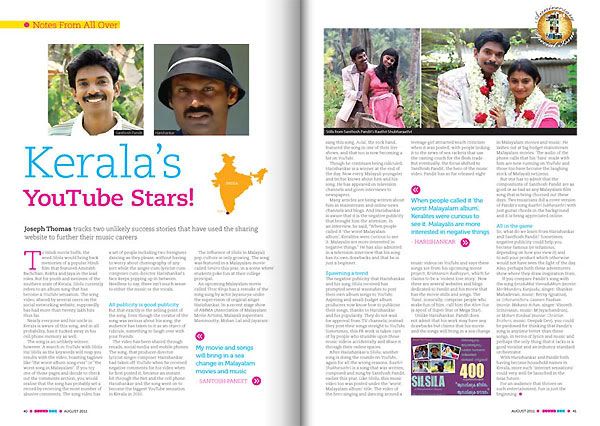
To Hindi movie buffs, the word ‘Silsila’ would bring back memories of a popular Hindi film that featured Amitabh Bachchan, Rekha and Jaya in the lead roles. But for youth and netizens of the southern state of Kerala, “Silsila” currently refers to an album song that has become a YouTube sensation. The song video, shared by several users on the social networking website, supposedly has had more than twenty lakh hits thus far.

Nearly everyone and his uncle in Kerala is aware of this song, and in all probability, has it tucked away in his phone’s memory as well.

The song is an unlikely winner, however. A search in YouTube with ‘Silsila Hai Silsila‘ as the keywords will reap you results with the video, boasting taglines like “the worst album song ever” or “the worst song in Malayalam“. If you try one of those pages and decide to check out the comments section, you would realise that the song has probably set a record by receiving the most number of abusive comments. The song video has a set of people including two foreigners dancing as they please, without having to worry about choreography of any sort while the singer-cum-lyricist-cumcomposer-cum-director Harishankar’s face keeps popping up in between. Needless to say, there isn’t much sense to either the music or the vocals.

All publicity is good publicity

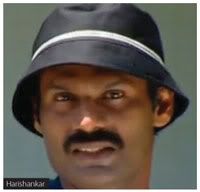
Silsila HarishankarBut that exactly is the selling point of the song. Even though the creator of the song was serious about his song, the audience has taken to it as an object of ridicule, something to laugh over with your friends.
The video has been shared through emails, social media and mobile phones. The song, that the producer-director-lyricist-singer-composer Harishankar had taken off YouTube when he received negative comments for his video when he first posted it, became an instant hit through the Net and the cell phone. Harishankar and the song went on to become the biggest YouTube sensation in Kerala.

The influence of Silsila in Malayali pop-culture is only growing. The song was featured in a Malayalam movie called “Seniors“, in a scene where students poke fun at their college principal. An upcoming Malayalam movie called “Three Kings” has its remake of the song sung by actor Jayasurya under the supervision of original singer Harishankar. In a recent stage show of AMMA (Association of Malayalam Movie Artists), Malayali superstars Mammootty, Mohan Lal and Jayaram sang this song. Avial, the rock band, featured the song in one of their live shows, and that too is now becoming a hit on YouTube.

Though he continues being ridiculed, Harishankar is a winner at the end of the day. Now every Malayali youngster and techie knows about him and his song. He has appeared on television channels and given interviews to newspapers. Many articles are being written about him in mainstream and online news channels and blogs. And Harishankar is aware that it is the negative publicity that brought him the attention. In an interview, he said, “When people called it ‘the worst Malayalam album’, Keralites were curious to see it. Malayalis are more interested in negative things.” He has also admitted in a television interview that his song has its own drawbacks and that he is just a beginner.

Spawning a trend

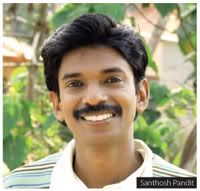
Santhosh PanditThe negative publicity that Harishankar and his song ‘Silsila’ received has prompted several wannabes to post their own album songs to YouTube. Aspiring and small-budget album producers now know how to publicise their songs, thanks to Harishankar and his popularity. They do not wait for approval from TV channels; instead they post their songs straight to YouTube. Sometimes this PR work is taken care of by people who stumble upon these music videos accidentally and share it through their online spaces.

After Harishankar’s “Silsila”, another song is doing the rounds on YouTube, again for all the wrong reasons. “Raathri Shubharaathri” is a song that was written, composed and sung by Santhosh Pandit. Like “Silsila”, this music video too was posted under the ‘worst Malayalam album’ title. The video of the hero singing and dancing around a teenage girl attracted much criticism when it was posted with people linking it to the news of sex rackets that use the casting couch for flesh trade. But eventually, the focus shifted to Santhosh Pandit, the hero of the music video. Pandit has so far released eight music videos on YouTube and says these songs are from his upcoming movie project, “Krishnanum Radhayum”, which he claims to be a ‘violent love story’. Now there are several websites and blogs dedicated to Pandit and his movie that has the movie stills and songs. The ‘fans’, ironically, comprise people who make fun of him, call him the Alien Star (a spoof of Super Star or Mega Star).

Unlike Harishankar, Pandit does not admit that his work may have any drawbacks but claims that his movie and the songs will bring in a sea change in Malayalam movies and music. He lashes out at big budget mainstream Malayalam movies. The audio of the phone calls that his ‘fans’ made with him are now running on YouTube and those too have become the laughing stock of Malayali netizens. But one has to admit that the compositions of Santhosh Pandit are as good as any Malayalam film song that is being churned out these days. Two people did a cover version of Pandit’s song “Raathri Subharaathri” with just guitar chords in the background and it is being appreciated online.

All in the game

So, what do we learn from Harishankar and Santhosh Pandit? Sometimes negative publicity could help you become famous (or infamous, depending on how you view it) and to sell your product which otherwise would not have seen the light of the day. Also, perhaps both these adventurers show where they draw inspiration from. If you compare Pandit’s song with the song “Entadukkal Vannadukkum” (movie: Merikkundoru Kunjaadu, singer: Shankar Mahadevan, music: Berny-Ignatius), or “Othorumichoru Gaanam Paadaan” (movie: Makante Achan, singer: Vineeth Srinivasan, music: M Jayachandran), or “Moham Kondaal” (movie: Christian Brothers, music: Deepak Dev), it will make you think that Pandit’s song is anytime better than these movie songs in terms of lyrics and music and perhaps the only thing that it lacks is a good vocalist and an industry-standard orchestrator.

With Harishankar and Pandit both having become household names in Kerala, more such ‘internet sensations’ could very well be launched in the near future. For an audience that thrives on such entertainment, the fun is just beginning.

Kudos to you, Gayatri!

My respect to playback singer Gayatri just went up for speaking openly against the malpractices of Malayalam film music industry. Gayatri, in a response to music director M Jayachandran, has lashed out at his unwarranted comments. Read the full interview here (in Malayalam).

To those who cannot read Malayalam, here is a loose translation of the core of what she said:

M Jayachandran doesn’t need to tell me that I should listen to Shreya Ghoshal. I don’t need his advise. I don’t need to hear his opinion to understand that Shreya is the best singer in India. I’m not stupid enough to criticize Shreya’s singing.

****

I’ve never asked for a chance to any music director. I am very happy in my space. These people should understand this.

****

Bollywood singers are paid good money here, but what is the situation of our singers up north? I know about this. I have heard people blaming Hariharan’s pronunciation. They are very strict on this matter. They never would excuse even a small mistake. But what about us? The song “Chaanchaadi aadi” sung by Adnan Sami is rated very low in the charts. It’s not my personal opinion. People say this on media. The problem is not the choice of the audience, but the attitude of [Malayalam film music] industry.

****

The industry doesn’t consider the local singers. I stand by that opinion. Singers from other states are VIPs for us. But do we get the same treatment from them? We are still asked “do you want the travel allowance” after we sing and this happens to singers like us who have been in this field for years. We are asked such questions when the north Indian singers are paid upto Rs. 75,000 per song. But the industry doesn’t have at least Rs. 2000 for singers like us.

****

Why this discrimination? If it’s Adnan Sami, they are ready to pay upto 1 lakh rupees. We do not ask even half of this amount. All singers face this but nobody dare to tell the truth. But it must be told.

****

Up to an extent, it is the singers themselves to be blamed. Some singers who come from reality shows tell the MDs, “sir, I will give Rs. 50000, please give me a chance”. Singers as a whole suffer due to this kind of people.

****

There are organizations like MACTA and FEFKA. We go to their programmes and sing for free. They need our co-operation for their programmes but our needs are not considered.

****

There is no gender difference in the case of singers not being paid for their work. In Bollywood and Tamil Nadu, they would send us call sheets even for small jingles. It is because they respect the work we do. Is there anything like it here?

Also you can listen to my Malayalam podcast with Gayatri and Pradip Somasundaran (in two parts) for M-Pod below.

Part I

Part II